Showing posts with label books. Show all posts

31 January 2007

O gótico de Goethe * Goethe's gothic


I shall grow old, and horrible, and dreadful. But this picture will remain always young. It will never be older than this particular day of June... If it were only the other way! If it were I who was to be always young, and the picture that was to grow old! For that – for that – I would give everything! Yes, there is nothing in the whole world I would not give! I would give my soul for that! - Oscar Wilde, The Picture of Dorian Gray

O mito de Fausto, germânico na sua origem e confundindo-se com o Fausto histórico, passou por inúmeras variações, quer a nível de género literário – tragédia, lírica, romance – quer a nível temático. Doktor Faustus de Thomas Mann – a história do compositor Adrian Leverkühn – é a obra emblemática deste afastamento estrutural, em que a base do mito é mantida, sofrendo no entanto uma descontextualização para penetrar no universo musical.

Mas de todos os Faustos conhecidos na história da literatura europeia, o Faust de Johann Wolfgang von Goethe é o que frequentemente se considera como a tragédia de Fausto por excelência, pela sua complexidade e riqueza dramáticas, e por introduzir o tema da sedução, inédito até à altura e que, segundo Camille Paglia, lhe foi emprestado por Don Juan e Casanova.

Goethe personificou a viragem pela qual o doutor Fausto deixa de ser o exemplo do herege medieval que sofre as consequências de ter escolhido o caminho do Mal, para se tornar no símbolo iluminista do século dezoito e na incarnação do homem da civilização ocidental. Fausto é, em Goethe, o homem que se redime por ter sido motivado pela sua paixão para com a verdade através da razão e do conhecimento, conceitos fundamentais do século das luzes.

A tragédia está dividida em dois espaços simbólicos logo definidos no início de Prolog im Himmel pelos arcanjos (vv. 243-270). O Sol e a Luz do divino são os símbolos supremos de um cosmos ordenado e de mistérios impenetráveis, enquanto que a terra é apresentada como o palco de um violento jogo de forças entre a Luz e as Trevas.

O percurso de Fausto pode ser equiparado a uma viagem em que o viajante é orientado por um guia. De início, este guia – Mefistófeles – assume o comando e o percurso é escolhido por ele, devido à ignorância do viajante nestes caminhos inéditos. À medida que a viagem se desenrola, é o próprio Fausto quem vai aprendendo a dispensar a ajuda de Mefistófeles, tornando-se progressivamente independente dele para efectuar a escolha de caminhos mais nobres.

Nessa viagem, o itinerário principal é a procura do complemento feminino de Fausto, e embora não seja essa a intenção inicialmente demonstrada, é para esse destino que Mefistófeles o vai transportar. Desde a descoberta de formas imperfeitas de erotismo em Auerbachs Keller e a emergência do desejo sexual em Hexenküche, até à revelação do Eterno Feminino após a sua morte, Fausto experimentará duas paixões amorosas que correspondem a dois momentos da viagem em que o seu nível de independência intelectual é bastante distinto. A relação com Margarida corresponde ao período de infância intelectual e sexual, enquanto que no acto de Helena estamos perante um Fausto já em plena maturidade e consciente dos resultados que podem advir dos seus actos.

Fausto, tal como Dorian Gray, não hesita em entregar a sua alma. De algum modo, a busca de Fausto dirige-se para a imortalidade, não no sentido estrito, mas como uma procura de eternização de cada momento da vida, através do labirinto que constantemente a simboliza; imortalidade significa aqui também uma entrada no reino do espiritual, símbolo do poder criativo que Fausto poderá adquirir.

Fausto, de Johann W. Goethe, está publicado em português pela Editora Relógio d’Água, com a centenária tradução de Agostinho d'Ornellas e prefácio de Paulo Quintela, e mais recentemente (1999) com a belíssima tradução de João Barrento.
translation in progress...

18 November 2006

O elogio da loucura * In praise of folly

Não se deixem enganar. Por detrás de uma narrativa com um estilo literário - o do narrador - aparentemente intuitivo e carregado, ao mesmo tempo, de uma simplicidade linear e de ornamentos que parecem evocar uma escrita do século XIX (there is no escape from the wretchedness that stalks the earth), esconde-se um mundo de alusões e referências que tornam The Brooklyn Follies uma das mais inspiradas obras de Paul Auster.

Quem narra a história é Nathan Glass, um angariador de seguros reformado que resolve tornar-se um autodidacta das letras, e é preciso ser-se um grande autor como Auster para assumir este risco de deixar um fraco escritor como Nathan controlar a narrativa e ainda assim deslumbrar o leitor. Talvez porque há coisas que só conseguem assumir uma grande expressividade através das palavras simples de uma pessoa simples – a honesta e até ingénua capacidade de encantamento e de ilusão torna-se mais credível na voz do ignorante que do homem sábio. Ou num outro ângulo, e usando uma analogia shakespeariana, Iago não profere plenamente as palavras de acusação, ele sabe que o efeito será mais devastador se for o próprio Othello a verbalizar o corolário da suspeita que o irá destruir.

Apesar de tudo, o Auster de sempre está lá: mais uma vez um começo abrupto – I was loking for a quiet place to die; outra vez uma personagem-escritor; outra vez um livro-dentro-do-livro; outra vez Brooklyn; outra vez uma vontade incomensurável mas insatisfeita de que certos pormenores, que nos são acenados en passant, tivessem sido mais desenvolvidos porque temos a certeza que neles se escondem outros filões – não seria a primeira vez que Auster transportava um detalhe, uma personagem ou uma situação de um romance para o desenvolver noutro; outra vez tantos traços que constituem, com propriedade, o que já se pode intitular de estilo austeriano - mas não austero... Repetitivo? Nem pensar. Apesar de tantos referenciais e traços comuns, The Brooklyn Follies é uma obra completamente nova, e não o é apenas pelo estilo imposto pela voz do narrador que, aos olhos do leitor de Auster é como a Coca-Cola do slogan pessoano, primeiro estranha-se, depois entranha-se.

The Book of Human Folly, o livro dentro de The Brooklyn Follies, o aglomerado de pequenas histórias, episódios, frases soltas e descrições que Nathan Glass vai escrevendo e revelando ao longo do romance é uma verdadeira caixa de surpresas e mostra bem o talento de Auster para compor anedotas da vida humana com uma grande dose de verosimilhança (já comprovado também no seu National Story Project que resultou na colectânea True Tales of American Life). São elas as anedotas que compõem os traços da anedota maior, pois anedótica é também a vida de Nathan, que, como bom comediante da vida, encontra um parceiro à altura da comédia, o volumoso sobrinho Tom Wood, desaparecido da sua vida há anos e reencontrado em Brooklyn nesta nova fase da(s) sua(s) vida(s). As associações podem ser inúmeras, desde a parelha cómica de Laurel e Hardy à estática união tragicómica de Vladimir e Estragon, mas certo é que a relação das duas personagens acaba por converter-se, em grande medida, no motor que impulsiona a acção.

Poderia ainda, em conclusão, referir as temáticas abordadas ao longo das “follies”, elas próprias as “follies” da vida – a paixão, a amizade, a velhice, o sonho, a homossexualidade, a ambição, o desencantamento… – mas todos esses aspectos, e muitos outros, significam apenas uma nova roupagem para o grande fio condutor, a intemporalidade que começamos a encontrar padronizada na obra de Auster: o caminho percorrido pela vida humana, repleto de acasos, coincidências, desvios, regressos, surpresas, encontros e desencontros e, acima de tudo, muitas loucuras.

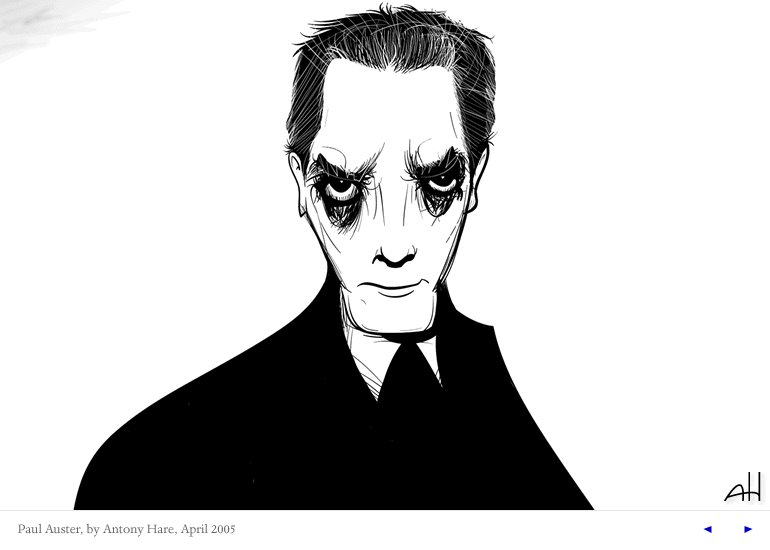
Paul Auster caricature © Anthony Hare 2005
Do not fool yourselves. Behind a narrative with a literary style – the narrator’s – apparently intuitive and simultaneously filled with a straight simplicity and ornaments that seem to evoke a 19th century writing (there is no escape from the wretchedness that stalks the earth), a world of allusions and references are hiding, and these make The Brooklyn Follies one of the most inspired works of Paul Auster.
The narrator of the story is Nathan Glass, a retired insurance clerk who decides to become a self-taught writer, and you need to be a great author like Auster to take the risk of letting a feeble writer like Nathan control the narrative and still fascinate the reader. Maybe that’s because there are things that can only assume a great expressiveness through the simple words of a simple person – the honest and yet naïve talent of enchantment and illusion becomes more plausible through the voice of the ignorant than through that of the wise man. Or, in a different perspective, and using a Shakespearean analogy, Iago does not fully pronounce the words of accusation, he knows the effect will be far more devastating if Othello himself verbalises the corollary of suspicion that will destroy him.
In spite of all, the usual Auster is there: once more an abrupt beginning – I was looking for a quiet place to die; once more a character-writer; once more a book-within-the-book; once more Brooklyn; once more an immeasurable yet unfulfilled will that some details, waved at us en passant, had been more deeply developed because we are sure that other springs are hidden there – it wouldn’t be the first time that Auster carries a detail, a character or a situation from a novel to develop it in another one; once more so many traces that make up, on their own right, what can already be entitled an Austerian – but not austere – style… Repetitive? No way. Despite so many references and common traces, The Brooklyn Follies is a completely new work, and not just because of the style imposed by the narrator’s voice which, to the eyes of the Auster reader is like Coca-Cola in the advertising catch-phrase devised by the Portuguese poet Fernando Pessoa, first you drive it out, then it drives into you.
The Book of Human Folly, the book within The Brooklyn Follies, the agglomerate of short stories, episodes, loose sentences and descriptions that Nathan Glass writes and reveals throughout the novel is a real prestidigitator’s hat and shows well Auster’ talent to compose anecdotes of human life with a large amount of likelihood (already proven in his National Story Project, which led to the collection True Tales of American Life). These are the anecdotes that make up the traces of the bigger anecdote, for Nathan’s life is also anecdotic – and like any good comedian of life, he finds himself a suitable sidekick for the comedy, his huge nephew Tom Wood, who had vanished from his life years ago and was reencountered in Brooklyn during the new stage of his (their) life (lives). The associations may be countless, from the comedy partnership of Laurel and Hardy to the static tragicomedy union of Vladimir and Estragon, but what is certain is that the relationship between the two characters ends up becoming, to a great extent, the fuel that propels the action.I could still mention, to conclude, the themes focused throughout the “follies”, the “follies” of life by themselves – passion, friendship, ageing, dream, homosexuality, ambition, disillusion… – but all those aspects, and many others, only mean a new wrapping for the big streamline, the timelessness that we start to find as a pattern in Auster’s work: the path taken by human life, filled with chance, coincidence, detours, returns, surprises, encounters and evasions and, above all, a lot of folly.

12 September 2006

A casa dos horrores * The house of horrors


A actriz britânica Shirley Eaton (1937-...) ficou imortalizada na história do cinema pela sua participação em Goldfinger (1964) de Guy Hamilton, o terceiro da série James Bond protagonizado por Sean Connery: apesar de relegada para segundo plano pela ‘bondgirl’ Honor Pussy Galore Blackman, ninguém esquecerá o corpo de Eaton completamente coberto de tinta dourada. Alguns anos antes desse banho de spray dourado, Shirley Eaton protagonizou What a Carve Up! (1961), uma comédia negra de Pat Jackson (baseda livremente em The Ghoul (1933) de T. Hayes Hunter), que, se bem que a comparação seja, a meu ver, um pouco depreciativa e até injusta, se aproximava um pouco do estilo da fastidiosa série de filmes de comédia Carry On.../Com jeito vai... (30 filmes entre 1958 e 1978, mais uma tentativa de 'reanimação' em 1992 - é obra!).

Este filme, e especialmente a cena em que Linda, a personagem representada por Eaton, é surpreendida a despir-se no quarto por um embaraçado Ernie (Kenneth Connor), constitui - juntamente com Yuri Gagarin, Orfeu (o de Jean Cocteau), tabletes de chocolate e cassetes de vídeo - uma das obsessões recorrentes de Michael Owen, o protagonista do romance de 1994 de Jonathan Coe que pediu emprestado o título ao filme de Jackson.

A narrativa segue duas linhas paralelas, estabelecidas logo no prólogo e apresentadas ao longo da primeira parte sempre em capítulos alternados. Por um lado, o desvendar da vida do obscuro e angustiado escritor Michael Owen, que tem como fio condutor a misteriosa comissão da biografia de uma das mais ricas e influentes famílias britânicas - a família Winshaw. Por outro, a revelação dos membros da terceira geração dessa família - a narrativa enquadra precisamente três gerações de Winshaws (17 ao todo), o que tornaria as primeiras páginas do livro algo confusas, não fora o recurso a uma árvore genealógica logo no início do prólogo, cuja consulta ajuda o leitor a localizar as personagens na estrutura familiar. A informação narrada nestes capítulos é obtida a partir das pesquisas de Michael para a composição da biografia, incluindo fragmentos de programas de televisão, artigos de revistas, etc., o que nos faz seguir durante toda esta primeira parte a perspectiva de Michael, que por sua vez assume a dificuldade em manter a realidade separada da ficção à medida que se vai envolvendo cada vez mais com os Winshaws.

A segunda parte decorre na lúgubre mansão da família, onde é lido o testamento de Mortimer Winshaw. Nesta momento em que todas as peças do puzzle se encaixam através das esperadas revelações (como num jogo de Cluedo), num misto de romance de Agatha Christie e filme de Terence Fischer, vemos a oportunidade de Michael finalmente se encontrar cara a cara com os Winshaws que ainda estão vivos, apenas para confirmar através dos acontecimentos que a sua relação com a família ultrapassa o carácter profissional da escrita biográfica. Mais ainda, essa é a noite em que o escritor que desde criança vive obcecado com What a Carve Up! (o filme) confirma finalmente a sensação - que sente desde que o vira com nove anos - de que não é um mero espectador mas uma personagem que o vive por dentro sem qualquer controlo dos acontecimentos – facto corroborado pelo facto de Michael deixar de ser narrador na primeira pessoa e com o clímax no momento em que encarna Kenneth Connor e surpreende a sua própria Shirley Eaton no quarto da mansão, culminando assim o processo que se adivinha com o constante dejà vu da cena ao longo da narrativa.

A família Winshaw é um retrato cru e mordaz, centrado entre os mandatos conservadores de Margaret Thatcher e John Major, de uma Inglaterra literalmente despedaçada (carved up) por um pequeno grupo dominante que sistematicamente mina as reformas do Seviço Nacional de Saúde, arrasa sem escrúpulos o mercado bolsista, favorece artistas em troca de favores sexuais, inunda o mercado alimentar com carnes provenientes de criações com duvidosos métodos de rentabilização e vende armas a Saddam Hussein enquanto se espera que este invada o Kuwait (o livro foca com alguma persistência a ansiedade da expectativa de uma guerra do golfo que está iminente). Muito mais que uma simples sátira socio-política, esta narrativa é uma experiência de leitura extremamente completa e grandemente enriquecida através da mistura de géneros, e influências, especialmente as de origem cinematográfica: o cinema contamina claramente este livro, o que apesar de tudo não é surpreendente - não esqueçamos que Coe também se move nos meios cinematográficos tendo escrito biografias de Humphrey Bogart e de James Stewart.

The British actress Shirley Eaton (1937-...) was immortalised in the history of cinema by her appearance in Guy Hamilton’s Goldfinger (1964), the third in the James Bond series starring Sean Connery: although hidden under the shadow of the ‘bondgirl’ Honor Pussy Galore Blackman, no-one will forget Eaton’s body completely covered in golden paint. A few years before that golden spray bath, Shirley Eaton had starred in What a Carve Up! (1961), Pat Jackson’s black comedy (freely inspired in T. Hayes Hunter’s The Ghoul (1933)), which, even if the comparison seems, to me, a bit derogative and even unfair, came a bit close to the style of the tedious comedy film series Carry On... (30 films from 1958 and 1978, plus one revival attempt in 1992 – that’s something!).

This film, and especially the scene where Linda, the character played by Eaton, is surprised undressing in her room by an embarrassed Ernie (Kenneth Connor), is one of Michael Owen’s recurring obsessions – together with Yuri Gagarin, Orpheus (Jean Cocteau’s), chocolate bars and videotapes. Owen is the main character of the 1994 Jonathan Coe’s novel which borrowed the title from Jackson’s film.

The narrative follows two parallel lines, established right away in the prologue and presented throughout part one, always in alternate chapters. On the one hand, the disclosure of the live of obscure and anguished writer Michael Owen, which gravitates around the mysterious commission for the biography of one of the richest and most influent (and vilest) British families – the Winshaw family. On the other, the revelation of the members of the family’s third generation – the narrative encloses precisely three generations of Winshaws (17 of them), which would make the first pages of the book somehow confusing without the help of the family tree printed at the beginning of the prologue. It does help the reader locate the characters within the family structure. The information narrated in these chapters is obtained from Michael’s researches for the composition of the biography, including fragments of television programmes, magazine articles, etc., which makes us follow Michael’s perspective for the whole part one. He actually assumes how difficult it is to keep reality and fiction apart as he gets more and more involved with the Winshaws.

Part two takes place in the lugubrious family mansion, where Mortimer Winshaw’s will is read. At this moment in which every piece of the puzzle fits via the expected revelations (as in a Cluedo game), in a mixture of Agatha Christie’s novel and Terence Fischer’s film, we see Michael’s opportunity, at last, to meet the remaining Winshaws face to face, only to confirm through the events that his relation with the family goes far beyond the professional status of biographical writing. Moreover, that is the night where the writer, who had been obsessed with What a Carve Up! (the film) since his childhood, finally confirms the feeling – which he’d had since he first saw it at the age of nine – that he is not a mere spectator, but a character living it from the inside without any control of the events – fact confirmed by the fact that Michael stops being the first person narrator, and by the climactic moment where he embodies Kenneth Connor and surprises his very own Shirley Eaton in the mansion room, concluding thus the process one could guess with the constant dejà vu of this scene throughout the narrative.

The Winshaw family is a raw and poignant portrait, centred between the conservative administrations of Margaret Thatcher and John Major, of an England literally carved up by a small dominant group that systematically undermines the National Health Service reforms, ruthlessly knocks down the stock market, favours artists in return for sexual favours, fills up the food market with meat that comes from farms with dubious methods of cost-effectiveness and sells guns to Saddam Hussein while waiting for him to invade Kuwait (the book focuses persistently on the anticipating anxiety of an imminent gulf war). Much more than a simple socio-political satire, this narrative is an extremely comprehensive reading experience and one greatly enriched by the mixture of genres and influences, especially those of cinematic origin: cinema clearly crawls into the book, which, after all, is not surprising at all if we bear in mind that Coe also moves in the cinematographic media, since he wrote Humphrey Bogart and James Stewart’s biographies.
Jonathan Coe's bibliography:
The Accidental Woman Duckworth, 1987
A Touch of Love Duckworth, 1989
The Dwarves of Death Fourth Estate, 1990
Humphrey Bogart: Take It and Like It Bloomsbury, 1991
James Stewart: Leading Man Bloomsbury, 1994
What a Carve Up! Viking, 1994
The House of Sleep Viking, 1997
The Rotters' Club Viking, 2001
Like a Fiery Elephant: The Story of B. S. Johnson Picador, 2004
The Closed Circle Viking, 2004
Prizes and awards:
1995 Mail on Sunday/John Llewellyn Rhys Prize What a Carve Up!
1995 Prix du Meilleur Livre Etranger (France) What a Carve Up!
1997 Writers' Guild Award (Best Fiction) The House of Sleep
1998 Prix Médicis Etranger (France) The House of Sleep
2001 Bollinger Everyman Wodehouse Prize The Rotters' Club
2005 Samuel Johnson Prize Like a Fiery Elephant: The Story of B. S. Johnson
2006 International IMPAC Dublin Literary Award The Closed Circle

03 July 2006

O homem na lua * Man on the moon


Quem está familiarizado com a obra de Paul Auster reconhecerá diversos temas recorrentes que lhe são transversais - demandas recheadas de eventos causados por e causadores de coincidências (ou sincronicidades, na perspectiva psicanalítica de Jung) ou as vidas errantes cujo caminho invariavelmente termina no abandono e na degradação voluntária da condição humana como factor essencial para um auto-conhecimento.
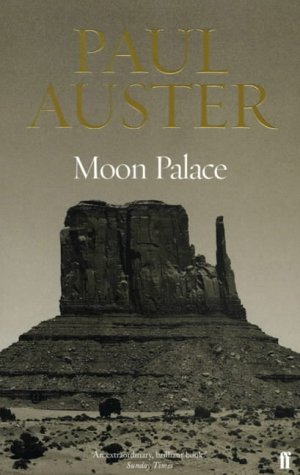
Para além dessas questões, Moon Palace* (1989), a obra cujo título antevê as 1001 alusões que encerra relativamente à lua , faz-nos embarcar numa viagem pela história da conquista da América, que tem tanto de documental como de místico e de enganador: Auster recorre ao mise en abyme, com duas narrativas (três, se contarmos com o romance de cordel de Barber) dentro da história contada pelo protagonista Marco Stanley Fogg, que desafiam a sua - e a nossa - credulidade e que culminam inclusivamente, no esquema Austeriano de inter-relação entre eventos aparentemente desconexos, com a descoberta que Fogg faz de si mesmo e do seu universo pessoal.
Moon Palace ensaia também uma visão da arte americana associada à conquista do Oeste através da referência às obras de Thomas Moran e Ralph Blakelock, que captam a atmosfera e a dimensão grandiosa das paisagens lunares da América selvagem, com especial destaque para Moonlight de Blakelock que permite a Fogg a primeira reflexão profunda e o início da compreensão não só do pensamento do velho Effing mas também da arrebatadora grandeza convocada nesse quadro. O próprio Effing é, afinal, também ele um pintor cuja atracção por esse espaço arrebatador o leva a uma mudança extrema de vida que engloba uma vida de ermita no deserto, um simulacro de morte e uma mudança de identidade, por entre crimes, dinheiro sujo e um espólio de quadros que, antes que alguém os possa ver, acabará por ficar para sempre sepultado numa gruta submersa, questionando de forma muito directa o que é a arte em função da sua recepção - ou da ausência absoluta de recepção.
Também a ciência, no que ela tem de insólito e episódico, e concretamente através da menção a Nikola Tesla, sua rivalidade com Thomas Edison e a construção da torre de Wardenclyffe para telecomunicações sem fios (em 1901), tem lugar na estruturação da narrativa biográfica de Thomas Effing, mostrando uma vez mais a grandiosidade culminando na decadência, com o encontro, mais tarde, de Effing com um Tesla já decrépito e senil.
As três gerações de personagens nesta obra procuram um sentido para a sua vida e estes três sentidos acabam por se encontrar nos improváveis laços de parentesco que vamos descobrindo à medida que as histórias são contadas pelo narrador. Acima de tudo, Auster deixa o leitor com aquela sensação de querer ir mais longe, obrigando-o a unir pontas soltas que deixa como provocação, como a gruta que alberga a intrigante obra pictórica de Effing, que fica esquecida durante uma boa parte do romance e é relembrada já perto do fim, para logo ser definitivamente apagada pela impossibilidade de lá voltar (em Oracle Night, Auster viria a propor um desafio semelhante, mas desta vez, em vez de um conjunto de quadros, seria uma personagem a ficar indefinidamente, e sem saída possível, fechada num bunker).
A obra de Auster vive destes jogos, e tal como a própria vida não representa necessariamente um caminho claro e linear, mas antes uma sucessão de ilusões e desilusões que tanto podem despertar o desejo de devorar mais e mais páginas, ou frustrar ao ponto de se sentir a tentação de abandonar a leitura com o sentimento de logro pela palavra. Evidentemente, este sentimento não costuma durar muito.
* Encontrei aqui um website muito completo para quem quiser dissecar Moon Palace ao pormenor. Contém críticas, sinopses, mapas, listagens (como as ocorrências da palavra moon), cronologias, reproduções de quadros, informação sobre figuras e eventos históricos associados à obra... e muito mais.
If you’re familiar to Paul Auster’s work, you’ll recognise several recurring subjects which intersect it – quests filled with events both cause and effect of coincidences (or synchronicities, in Jung’s psychoanalytical perspective) or drifting lives whose path invariably ends up in the abandoning and voluntary degradation of the human condition as a critical factor to allow the knowledge of the self.
Besides those issues, Moon Palace* (1989), the novel whose title foretells the myriad of references to the moon it includes, takes us aboard a trip through the conquest of America's history, which is so much documental as it is mystical and deceiving: Auster uses the mise en abyme, with two narratives (three, if we count Barber’s pulp novel) inside the story told by Marco Stanley Fogg, which defy his – and our – trustfulness and, in the Austerian system of interconnectedness among apparently disassociated events, end with Fogg’s discovery of himself and his personal universe.
Moon Palace also runs through a vision of American art associated to the conquest of the West through the reference to Thomas Moran and Ralph Blakelock’s works that capture the backdrop and the vast dimension of wild America’s lunar landscapes, especially Blakelock’s Moonlight which allows Fogg his first deep reflection and the beginning of his understanding of both old Effing’s thought and the awe-inspiring grandeur invoked in the painting. Effing himself is, after all, an artist whose attraction to that overwhelming landscape leads to an extreme life change that encompasses a hermit’s life in the desert, a pretence death and a change of identity, amongst crimes, dirty money and an array of paintings that, before anyone can see, will end up forever buried in an underwater cave, questioning very openly what is art in terms of its reception – or the absolute absence of reception.
Science, or its startling and episodic elements - and specifically in the reference to Nikola Tesla, his rivalry with Thomas Edison and the building of the Wardenclyffe tower for wireless communications (in 1901) - has also a place in the structuring of Thomas Effing’s biographical narrative, showing once more magnitude becoming decadence, with the late encounter of Effing with an already decrepit and senile Tesla.
The three generations of characters in this work search for a sense in their lives and these three senses end up meeting one another in the unlikely family bonds disclosed as the stories are told by the narrator. Above all, Auster leaves the readers with the feeling of wanting to go further, forcing them to tie the loose ends he leaves as a provocation, like the cave that keeps Effing’s intriguing pictorial work, which is left forgotten for most of the novel and is remembered near the end, only to definitely wipe out any possibility of going back there (in Oracle Night, Auster would propose a similar challenge, but this time, instead of a set of paintings, it would be a character locked in indefinitely, and with no possibility of a way out, inside a bunker).
Auster’s work feeds on these games, and just like life itself, it doesn’t necessarily represent a clear and linear path, but a succession of illusions and disillusions that can both arouse the desire of devouring more and more pages, and frustrate you to the extent of sensing the temptation to drop the book, feeling deceived by words. Naturally, this feeling doesn’t usually last very long.
* I’ve found here a very comprehensive website if you feel like dissecting every detail in Moon Palace. It contains reviews, synopsis, maps, listings (like the uses of the word moon), chronologies, reproductions of paintings, information on historical personae and events relate to the book… and much more.

22 June 2006

Alice vezes dois * Alice times two

O Rev. Charles Lutwidge Dodgson (1832-1898), professor de Matemática em Oxford, ficou para a história não como o eminente matemático que publicou diversos e relevantes tratados (Euclid and his Modern Rivals, de 1879 é o mais conhecido), mas como Lewis Carroll, o autor de Alice's Adventures in Wonderland (1865) e Through the Looking-Glass (1872), obras declaradamente infantis mas com uma série de características que as tornam apelativas e bastante interessantes para leitores mais amadurecidos. As aventuras de Alice foram originalmente contadas por Carroll à pequena Alice Liddell e às suas duas irmãs num dia de Verão de 1862, durante um passeio de barco, e no Natal desse ano Carroll ofereceu o livro a Alice com a dedicatória A Christmas Gift to a Dear Child in Memory of a Summer Day. Só 3 anos mais tarde seria publicado como Alice's Adventures in Wonderland, com as sobejamente conhecidas ilustrações de John Tenniel (a primeira versão tinha sido ilustrada pelo próprio Carroll).
Das inúmeras edições de Alice, destaco duas que sobressaem por motivos distintos:
A primeira é The Annotated Alice, editada por Martin Gardner (1ª edição em 1960). Gardner é um céptico e um estudioso prominente em diversas áreas, incluindo a matemática e a filosofia, que nos proporciona uma leitura rodeada de glosas elucidativas das private jokes de Dodgson, das alusões aos costumes vitorianos - que hoje teríamos dificuldade em contextualizar - e das questões matemáticas e simbólicas por detrás das referências a números que abundam na obra (Dodgson era especialista em charadas matemáticas). Após 46 anos, e revigorado por uma nova edição em 1999 (The Annotated Alice: The Definitive Edition, que reúne a edição de 1960 com a continuação More Annotated Alice, de 1990), Gardner mantém o estatuto de um dos grandes especialistas em Carroll, apesar da recente revisão da vida de Carroll proposta por Karoline Leach que refuta o "mito Carroll" que a crítica - Gardner inclusive - tem construído ao longo do século XX.

A segunda, numa perspectiva mais lúdica, é a edição de Alice's Adventures in Wonderland ilustrada por Anthony Browne. Trata-se de uma interessante alternativa às ilustrações de Tenniel, cujo pendor surrealista se encaixa perfeitamente no ambiente onírico da obra. Esta edição ganhou o Emil/Kurt Maschler Award e garantidamente encantará as crianças com as suas cores fortes e o seu humor, mas também adultos que apreciem ilustração de inegável criatividade artística. A obra vive numa comunicação constante com as imagens e, aliás, citando a protagonista, "para que serve um livro," pensou Alice, "sem imagens ou conversas?"

Rev. Charles Lutwidge Dodgson (1832-1898), Mathematics lecturer in Oxford, became renowned not as the prominent mathematician that published several relevant treatises (Euclid and his Modern Rivals (1879) is the most well-known), but as Lewis Carroll, the author of Alice's Adventures in Wonderland (1865) and Through the Looking-Glass (1872), works openly made for children but with a series of qualities that make them appealing and very interesting for more advanced readers. The adventures of Alice were originally told by Carroll to the little Alice Liddell and her two sisters in a summer day in 1862, during a boat ride, and at that year’s Christmas, Carroll offered the book to Alice with the dedication A Christmas Gift to a Dear Child in Memory of a Summer Day. Only 3 years later would it be published as Alice's Adventures in Wonderland, with the hugely famous illustrations by John Tenniel (the first version had been illustrated by Carroll himself).
From the numerous editions of Alice, I draw attention to two that stand out for different reasons:
The first one is The Annotated Alice, edited by Martin Gardner (1st edition in 1960). Gardner is a skeptic and a prominent scholar in several areas, including mathematics and philosophy, who gives us a reading surrounded with glosses enlightening Dodgson’s private jokes, the references to Victorian habits – which would be difficult for us to contextualise today – and the mathematical and symbolical issues behind the abundant references to numbers in the book (Dodgson was a specialist in mathematical charades). 46 years later, and renewed by a re-edition in 1999 (The Annotated Alice: The Definitive Edition, which gathers the 1960 edition with the sequel More Annotated Alice, from 1990), Gardner still remains one of the greatest Carroll specialists, despite the recent revision of Carroll’s life suggested by Karoline Leach, who refutes the "Carroll myth" that the scholars – including Gardner – have been building throughout the 20th century.
The second one, in a more playful perspective, is the edition of Alice's Adventures in Wonderland illustrated by Anthony Browne. It’s an interesting alternative to Tenniel’s illustrations, with a surrealistic character that perfectly fits in the dreamlike ambience of the book. This edition has won the Emil/Kurt Maschler Award and will surely delight children with its strong colours and humour, but also grown-ups who enjoy illustration with undeniable artistic creativity. The work lives in constant communication with the images and, in fact, as the main character says, ‘what is the use of a book,’ thought Alice, ‘without pictures or conversations?’

13 June 2006

Romance em vinil de 12 polegadas * A 12-inch vinyl novel


Qualquer melómano que tenha passado por Londres há alguns anos - décadas (!) - atrás, quando o vinil e a fita magnética ainda reinavam como suportes musicais, não pode ter passado ao lado das famosas lojas de music exchange, onde se podia comprar, vender e trocar discos a preços que permitiam pequenas extravagâncias ou encontrar aquela edição de colecção que perseguíamos há anos. Praticamente todas elas tinham um ambiente sombrio, desarrumado e sujo, e eram geralmente iluminadas por lâmpadas fluorescentes que ajudavam ainda mais a criar uma atmosfera que faria o consumidor da high street que lá entrasse por engano sair logo a correr julgando ter encontrado uma entrada para um submundo de criaturas subterrâneas. Pelo contrário, o cliente habitual sentia-se lá confortável era capaz de ficar horas a vasculhar todas as filas e caixas empoeiradas de álbuns à espera de encontrar aquela raridade que faria valer o tempo perdido e as doenças respiratórias provocadas pelos exércitos de ácaros inalados em cada fôlego - nada disso importava nesta procura do santo graal de 12 polegadas. Este é precisamente o cenário de High Fidelity, o best-seller de Nick Hornby.
High Fidelity - Alta Fidelidade na tradução portuguesa - acompanha as desventuras emocionais do obsessivo Rob Fleming, proprietário de uma loja de discos independente e marginal, em tudo semelhante às que descrevi atrás, que questiona as suas relações passadas para tentar compreender o que correu mal. Rob organiza compulsivamente tudo à sua volta em tops de 5 favoritos. É esta a estrutura em redor da qual se desenvolve a narrativa, em particular no que diz respeito ao "top 5" das separações de namoradas.
O romance de Hornby é, em simultâneo, extremamente hilariante e assustadoramente realista nas descrições das frustrações e traumas que perseguem Rob desde a sua infância. Qualquer homem é capaz de se rever na infância e adolescência do protagonista, o que cria imediatamente - pelo menos nos leitores masculinos - uma ligação com a personagem que faz desculpar-lhe o egoismo, as traições e as idiotices que vai perpetrando ao longo da história. Rob é o idiota que sabe que o é, admite-o e tortura-se com isso à medida que se apercebe que não há redenção.
Tal como praticamente toda a narrativa de Hornby, este romance está eficazmente construído para provocar o riso (atenção se lerem em locais públicos) e por isso, se não valer para mais nada (não é o meu caso), High Fidelity vale para os Robs deste mundo descobrirem que não faz mal rirem-se de si próprios, pois essa extensão é um efeito secundário muito provável.
Any music lover who has been to London some years – decades (!) – ago, back when vinyl and magnetic tape still ruled as musical media, can’t have missed the famous music exchange stores, where you could buy, sell and exchange records at prices that allowed you little extravagances or to find that same collector’s edition you’d been chasing for years. They usually exhibited a murky, dismal, untidy quality, and were generally lit by fluorescent tubes which helped even further create an environment that would make the occasional distracted high street shopper run away from it, suspecting they’d found an entrance to an underworld where subterranean creatures lurked. On the contrary, the usual customer would feel very comfortable there, and would be capable of spending hours exploring through all the album rows and dusty boxes hoping to find the rarity that would make up for the wasted time and the respiratory diseases caused by the armies of dust mites inhaled with every breath – none of that mattered in this search for the 12-inch holy grail. This is precisely the setting of High Fidelity, Nick Hornby’s bestseller.

In High Fidelity we move along the emotional distresses of obsessive Rob Fleming, the owner of an independent record store similar to those described above, who questions his past relationships trying to understand what went wrong. Rob compulsively organises everything around him in top 5 favourites, and this is the structure around which the narrative revolves, particularly concerning the top 5 break-ups.
Hornby’s novel is, at the same time, extremely hilarious and frighteningly realistic in the descriptions of the frustrations and traumas that haunt Rob since his childhood. Any man can see himself reflected in the childhood and adolescence of this persona, which establishes right away – at least for male readers – a bond with the character that makes us forgive him the selfishness, betrayals and foolishness he perpetuates throughout the story. Rob is a fool and he knows it, acknowledges it and tortures himself with it, as he realises there is no redemption.
Just like in most of Hornby’s narrative, this novel is effectively shaped to trigger laughter (mind if you read in public places) and therefore, if it’s not worth for more (not my opinion), High Fidelity is worth for the Robs in this world to find out that it’s OK to laugh at themselves, for that extension is a very likely side effect.